Last week we learned a bit about the color wheel, how neutral colors are made when working with paint, and defined hue. If you missed it, check out Hue and the Color Wheel.
When using multiple colors in knitting and other fiber arts it most often comes down to contrast and in what way you wish the yarns/fibers/fabrics to contrast. In order for us all to be on the same page when discussing color harmonies and how they contrast we need to have a good grasp of the various ways in which to describe color. So, in this installment I will be defining a few of the common color descriptors with a few more to follow early next week.
Hue
Hue was defined in the previous installment, but it is very important to understand it so as a refresher, hue describes a range of wavelengths being emitted or reflected by an object. It is what differentiates each of the colors on the color wheel. Hue is described by the color name, though it is most often described by a general color family. Colors we refer to as candy apple red, sky blue and sea green, for example are not hues. Remove the descriptors of candy apple, sky, and sea and you are left with their hues of red, blue, and green. Hues usually are described with no more detail than the tertiary colors and more often just the secondary colors.
Tones, Tints and Tonal Families
If you take a color and add white to it to lighten it you have a what is referred to as a tint (bottom of the graphic below). All those nice, light pastels everyone loves dressing babies in are tints. Pink, baby blue, pale yellow, peach, etc. are examples of tints.
If you take a color and add black or gray to it we often say we are “toning it down.” Colors that are darkened by the addition of black or gray are called tones (top of the graphic below). So, if you look at the forecasted fashion colors for this season you will see there are many tones in that palette, especially those for women.
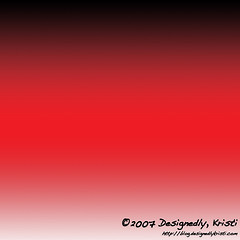 If you were to take a slice out of the color wheel and look at the gradations from the darkest tone, through the pure hue to the lightest pastel version you have what is called a tonal family. When we discuss color harmonies in the coming weeks the entire tonal family can be chosen from and still fit within a specific color harmony. In fact, one of the best ways to mix red and green and not get that stereotypical “Christmas” feel is to use different tones and tints of the two colors, such as a very dark green and a medium or light pink. It is still a red-green color combo, but by mixing up the tones and tints used you end up with a very different feel.
Chromaticity
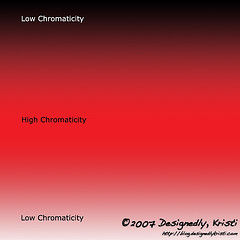 Chromaticity and saturation are ways in which we describe the pureness of a hue. Take a look at the tonal family. If you look at the color in the center of that graphic you see a red that is similar in qualities to those seen on the color wheels of the previous color post. It has no tint (whiteness) or tone (black/grayness). That color has a high chromaticity. The higher the chromaticity of a color, the closer it is to a pure hue.
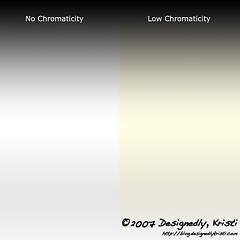 Why are tints and tones lower in chromaticity? Because if a hue has no chroma (the Greek word for color) it is a truly neutral white, gray or black. The range from black to white with no hue is the black tonal family. The black tonal family has the lowest chromaticity possible – none. Add in just a tiny bit of yellow to make the white more ivory and warm up the black slightly and there is chromaticity. Not much, but some.
Saturation
Those who have worked with mixing paints or dyes knows that adding white or black to the paint (or lowering the concentration of dye) is not the only way to make a color appear slightly “muddied.” A more complex and visually interesting way to create a duller appearing color is to add some of the complementary color – just as we did to make the neutrals last week, only often you tip the scales further towards one color of the complementary color pairs.
Yes, I did just say that one could make a more complex and visually interesting dull color. It may not sound possible, but if you are a multi-crafter or have kids and you have paint around, take two tubes – one color from each side of the color wheel (red and green, or blue and orange, or violet and yellow) and start working a titch of one color into the other. Keep tipping the scales until you get to a nearly 50/50 mix. All throughout the mixing process, no matter the ration of one color to the other, the resulting color has a bevy of undertones to it, yes?
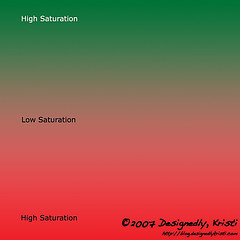 Technically speaking, saturation is the measure of how far a color is from gray. Sometimes this is referred to as intensity of a color. Colors mixed with their complementary colors move closer towards a neutral gray the closer to equal parts of each color and thus become lower saturation. Colors that are purer in hue are of higher saturation. Colors that are mixed with neighboring (analogous) colors are of higher saturation than those mixed with colors across the color wheel. The tones of a color are also lower in saturation.
So, in the paint experiment described above, you will be lowering the saturation of the paint color each time you add more of the complementary (see graphic at right). At least until you achieve the 50/50 ratio. If you keep adding the complementary color beyond that mark you are tilting the scale of the color towards the color you are adding and thus raising the saturation. Say we are working with red and green. You start with red and keep adding more green until you have a neutral color. During that stage you are decreasing the saturation. If you continue to add more green and turn the neutral towards the green side you are increasing the saturation each time you add more green to the mix.
Once again, the closer a color is to its pure hue, the higher the saturation of the color. If the color is nearer to the neutral that is made by mixing it with its complementary it is a low saturation color. Often such low saturation colors are described as muddy or dull.
Putting Chromaticity, Saturation and Tonal Families on a Color Wheel
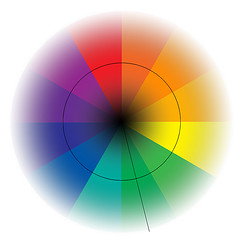 Just as you can mix neighboring colors infinite times and have an infinite set of colors or hues, you can have an infinite set of colors in a tonal family. The color wheel to the left shows the tertiary color wheel from the previous post with a tonal family overlay. The tones are at the center of the wheel and the tints on the outside.
You may notice a black circle cutting through the middle of the colorwheel. That is a line of constant chromaticity and saturation, marking the areas of purest hue. If you gave that circle a larger diameter is would still be a line of constant chromaticity and saturation (as long as it is centered on the wheel), they would just have different measures if the diameter of that circle were changed.
There is another line on that color wheel. One that moves straight out from the center of the color wheel through the center of the green section. This is a line marking a constant tonal family. In this case, it marks the green tonal family. Any color sampled along that line would be a part of the same tonal family.
Conclusion
So, those who read Margene’s post yesterday may have noted that she prefers purer colors. Another way to put that is to say she prefers high chromaticity and high saturation colors. If we look again at the forecasted colors for this coming season, the women’s colors especially fall into the category of low saturation and low chromaticity.
This has gotten a bit long. Color is easier learned about in small chunks and thought about and applied for a bit before moving on. So I’ll stop here for today and have the rest of the color descriptors early next week for you. While you await the remaining color descriptors, I suggestion observing the colors you come across in your day and analyzing them for saturation and chromaticity as well as identifying what tonal family they would be a part of. If they have lower chromaticity, are they tones or tints? Or, are they dulled by the addition of their complementary color?
Once again, if you have questions, please do not be shy, leave a comment!
Additional Posts in the Color Series
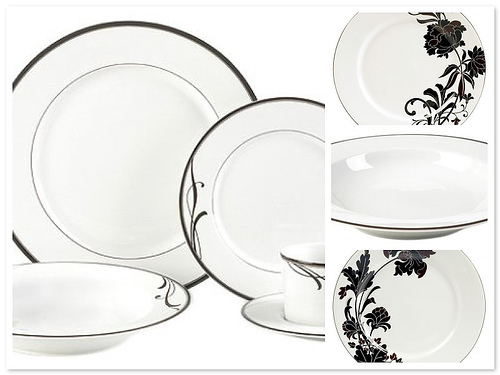
 (yes, better than going directily to Mikasa.com). Oddly, the store in Fort Collins with the largest selection of dishes is Bed, Bath, and Beyond, and they do carry it online, but right now no stores in the region have them in store yet. Go figure! But, I’m pretty sure I’m in love!
 While I’m lusting after “objects” I thought I’d include this one. I’ve been drooling over it (and the others like it) for months now. It is the Orange Nautilus Spiral Pendant from Etsy seller, Juln. It is natural that I’d be drawn to the orange, though I’m not sure if it’ll go with the shades of orange I’ve been wearing most often. It is so gorgeous I would want to be able to wear it often. The others beads and pendants in his shop are great. I have even seen one of his beads in person and they are well done and seem quite faithful to the photos.
 This week I have been listening to a fair amount of music and what I have been queuing up most has been Magda Hiller’s Icing on the Cake. She is mostly easily classified as a folk artist. That said, she weaves together blues and country and jazz into a fun unique sound.
  Lastly, even with the new television season kicking off this past week I am most excited about Dancing with the Stars - season 5! I hadn’t realized this show had been around so long and I have never succumbed to it before this. However, I kept running into people mentioning it - the ladies at water aerobics, my cousin’s wife, etc. etc. So, on Tuesday I watched it online and was hooked.